
If you are trying to understand Agentic AI in security and fraud prevention, you are asking the right question.
Today, AI is no longer just giving answers.
It is taking actions.
- It can access systems
- It can send requests
- It can complete tasks
But here is the real problem:
👉 What if AI takes action for the wrong person?
This is why security and fraud prevention are now critical when using Agentic AI. Agentic AI in security and fraud prevention means using AI systems that can take actions while verifying user identity and preventing fraud before executing tasks.
What Is Agentic AI?
Agentic AI is a type of AI that can:
- plan steps
- make decisions
- take actions
- complete tasks
👉 It does not just respond. It executes.
Simple real-world example
You tell an AI system:
“Send a payment” or “Access my account”
The AI can:
- check details
- process the request
- complete the action
👉 You do not control every step.
The hidden risk
If the request is fake, the AI may still act.
👉 Agentic AI works correctly, but for the wrong user
Read Also: Rational Agents in AI
Why Security Matters in Agentic AI
In traditional systems:
- humans verify actions
- approvals happen manually
But in Agentic AI:
- actions happen faster
- decisions are automated
👉 This creates a new risk.
Key problem
AI trusts the input it receives.
If the input is:
- fake
- stolen
- manipulated
👉 The output will also be wrong.
The Core Problem: AI Does Not Know Who the User Is
This is where most systems fail.
AI can:
- process requests
- take actions
But it cannot always confirm:
👉 Is this the real user?
Example
- someone uses a stolen account
- or copies a voice
- or sends a fake request
👉 The AI cannot always detect this.
Important truth
AI can act correctly, but for the wrong identity
Real Risk: How Agentic AI Can Be Used for Fraud
This is not a future problem. It is already happening.
Common fraud scenarios
- fake voice calls
- automated scams
- account takeovers
- unauthorized actions
Simple scenario
- An attacker copies a person’s voice
- Calls a system or sends a request
- The system trusts the input
- AI performs the action
👉 Result: money loss or data misuse
Key insight
Agentic AI can scale fraud faster than humans if not secured
How Agentic AI Helps in Security
Agentic AI is not only a risk. It is also part of the solution.
It can:
- monitor patterns
- detect unusual behavior
- respond quickly
- reduce human error
But there is a limit
👉 AI alone cannot solve identity problems
How Agentic AI Helps in Fraud Prevention
When used correctly, Agentic AI can:
- detect suspicious activity
- block risky actions
- monitor user behavior
- act in real time
Example
If a user behaves differently:
- new location
- unusual request
👉 AI can flag or stop the action
Where Most Systems Fail Today
This is the biggest gap in current systems.
Most systems:
- trust user input too easily
- rely only on passwords
- do not verify identity strongly
- lack multiple security layers
Result
👉 Fraud becomes easier
👉 AI becomes risky
The Missing Layer: Identity and Trust
To make Agentic AI safe, we need:
- identity verification
- voice checks
- secure authentication
- fraud detection
Important idea
AI should act only after verifying the user
How This Connects to Real Systems
This is where real-world systems come in.
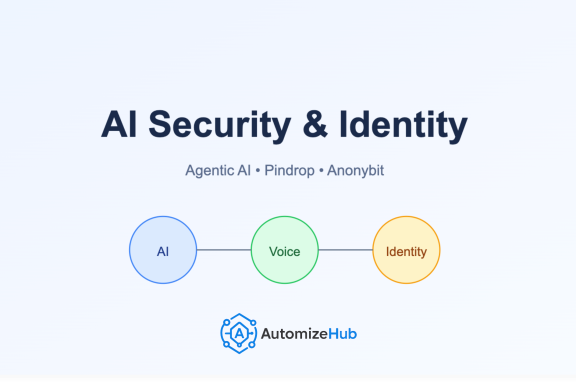
How This Connects to Agentic AI, Pindrop, and Anonybit
To make AI secure, different layers are needed:
- Agentic AI → performs actions
- Pindrop → checks if the voice is real
- Anonybit → secures identity using biometrics
👉 Together, they create a system where:
AI works only for verified users
👉 You can read the full breakdown here: Agentic AI Pindrop Anonybit blog
Real-World Use Cases
1. Banking
- prevent fraud transactions
- verify users before actions
2. Customer support
- check real customer identity
- stop scam calls
3. Hiring systems
- detect fake candidates
- prevent identity fraud
4. Account access
- stop unauthorized logins
- secure recovery process
5. Payment systems
- block suspicious transfers
- verify intent before execution
How to Use Agentic AI Safely
This is where most blogs fail. Here is a simple approach:
1. Verify identity before action
Always confirm the user before AI executes anything
2. Limit AI permissions
Do not give full access to all systems
3. Monitor behavior
Track unusual activity
4. Add multiple checks
Use voice, biometrics, and system validation
5. Review critical actions
Keep human oversight for high-risk tasks
Why This Matters for Businesses and Developers
For business owners
- protects money
- reduces fraud
- builds customer trust
For developers
- helps build secure systems
- ensures correct execution
For IT and security teams
- strengthens system protection
- improves monitoring
What Most Blogs Get Wrong
Most articles:
- focus only on benefits
- ignore real risks
- do not explain identity problems
- lack real-world examples
The Reality
👉 Agentic AI is powerful
👉 But without security, it becomes a risk
Key Takeaways
- Agentic AI can take real actions
- security is required before action
- fraud risk is increasing
- identity verification is critical
- safe AI means trusted AI
Conclusion
Agentic AI makes systems faster and more capable, but it also changes how risks appear. When actions are handled by AI instead of humans, even a small mistake in input can lead to serious outcomes. This is why security is not just an added feature, it becomes part of how the system should work from the start.
Fraud today is not always manual. It can be automated, repeated, and scaled using AI. If systems do not verify who is making the request, they may complete actions that should never happen. This is the gap that many systems still have.
To use Agentic AI properly, it is important to think beyond automation. Systems must check identity, observe behavior, and confirm intent before taking action. When this approach is followed, AI becomes more reliable and useful in real environments.
FAQs
1. What is Agentic AI in security?
Agentic AI in security refers to AI systems that can take actions while helping protect systems. These systems can monitor activity, verify inputs, and reduce the risk of unauthorized actions.
2. How does Agentic AI help in fraud prevention?
Agentic AI helps prevent fraud by detecting unusual behavior, monitoring actions in real time, and stopping suspicious requests before they are completed.
3. Can Agentic AI be used for fraud?
Yes, Agentic AI can be misused if identity is not verified. It can be used to automate scams, send fake requests, or perform unauthorized actions.
4. Why is identity important in Agentic AI?
Identity is important because Agentic AI can take real actions. If the system does not verify who is making the request, it may perform tasks for the wrong person.
5. Is Agentic AI safe to use?
Agentic AI is safe when combined with proper security systems like identity verification, monitoring, and fraud detection. Without these, it can become risky.
6. What is the biggest risk of Agentic AI?
The biggest risk is that Agentic AI may take actions for the wrong user if identity is not checked properly. This can lead to fraud or misuse.
7. How do businesses use Agentic AI for security?
Businesses use Agentic AI to monitor system activity, verify users, detect suspicious behavior, and prevent fraud in areas like banking, customer support, and account access.
8. Can Agentic AI replace security systems?
No, Agentic AI cannot replace security systems. It should work along with identity verification and fraud detection systems to be effective.
9. What are real examples of Agentic AI in fraud prevention?
Examples include detecting fraud in banking transactions, verifying users in support calls, preventing fake account access, and stopping suspicious payments.

No Comments