
These days, every business wants to use AI, but the truth is that most AI projects end up failing. Why? People create the solution first and then try to find the problem later. This solution-first mindset is the biggest mistake. That’s why 2025 has brought a major shift. AI is no longer just giving answers — it can think through steps, make decisions, and complete full workflows, almost like a digital employee. And this shift is exactly why building agentic AI applications with a problem-first approach is becoming so important.
But here’s the reality: AI only works well when the problem is clearly defined from the beginning.
What Is Agentic AI?
Agentic AI is a system that does more than just give answers. It can think, plan the next step, and complete the work for you.
In simple words, this type of AI doesn’t only react — it works actively to finish your task.
Real Everyday Examples of Agentic AI
-
An email system that reads your messages, plans a reply, and sends follow-ups automatically.
-
A lead management system that tracks your leads, sends updates, and follows up without you doing anything.
-
An employee task helper that assigns tasks, reminds the team, and keeps everything updated.
What Is the Problem-First Approach?
Identify the Real Problem — Not Technology-First
The problem-first approach means this: first understand the problem, then create the solution. This helps you make something that is useful, not something you build just because it is trending.
Why “Random AI Tools” Fail
Many people create AI tools without knowing the specific problem they aim to solve. This is why most random tools fail.
If there is no clear problem, the tool has no purpose.
Problem → Tasks → Agent → Tools Mapping Logic
This approach follows a very simple flow:
-
Problem: First, find the real problem
-
Tasks: Break it into small tasks
-
Agent: Decide what the AI system will do
-
Tools: Choose the tools needed to complete the work
This makes the whole plan easy and clear.
Mini Case Study: How a Small Problem Becomes a Great Problem to Solve
Now, let’s go deep into this topic with a real example. We checked many businesses and found one simple but very serious issue. Most businesses have websites, and they run paid ads. People click on the ad → land on the website → and then see a form. Users fill out the form and submit it.
But in many cases, the form is not submitted at all.
This problem mostly happens in WordPress websites. If the website owner has not updated a plugin, or if the contact form plugin, like Contact Form 7, WPForms, or any other plugin, has an error or version issue, then the form will stop working. And the biggest problem is — the website owner doesn’t even know that the form is not working. This is a very small problem, but also a very powerful problem to solve.
So we identified this issue and created a simple idea:
So we made this even better. We created an AI system that will submit the form by itself at the time you set. It can check the form every 5 minutes, 10 minutes, 1 hour, 12 hours, or even 24 hours—whatever timing the website owner wants. If the form is not working or the form does not submit, then this AI system will send a message on WhatsApp or Telegram to the website owner. This way, the owner will know immediately that the form is broken, and they can fix it before losing more leads.
So we solved this problem and created an AI system that checks the form automatically at the time they choose.
Practical Step by Step Guide for the Agentic AI
Now I will explain one practical example in a very simple way, so you clearly understand how a small problem can become a powerful problem to solve.
I created a workflow called “Extract Emails & Phones → Google Sheets”.
This workflow takes URLs, checks them one by one, extracts emails and phone numbers from the website, and then saves everything directly into Google Sheets.
Below is the step-by-step flow in very easy English:
1. Webhook (Trigger Point)
First, I added a webhook.
This is the point where the workflow starts.
It receives data through a POST API request.
This data includes multiple website URLs.
2. Set URLs
In the second step, I used a Set URLs node.
From the POST request, I get many URLs in JSON format.
This node helps me store and prepare those URLs for the next steps.
3. Make Items (Function Node)
Now I used the Make Items function.
This converts every URL into a separate item/object.
This is important because we want to check each URL one by one.
4. SplitInBatches
In the fourth step, I used SplitInBatches.
This makes sure we don’t call all URLs at the same time.
We set a batch size so requests go slowly and safely.

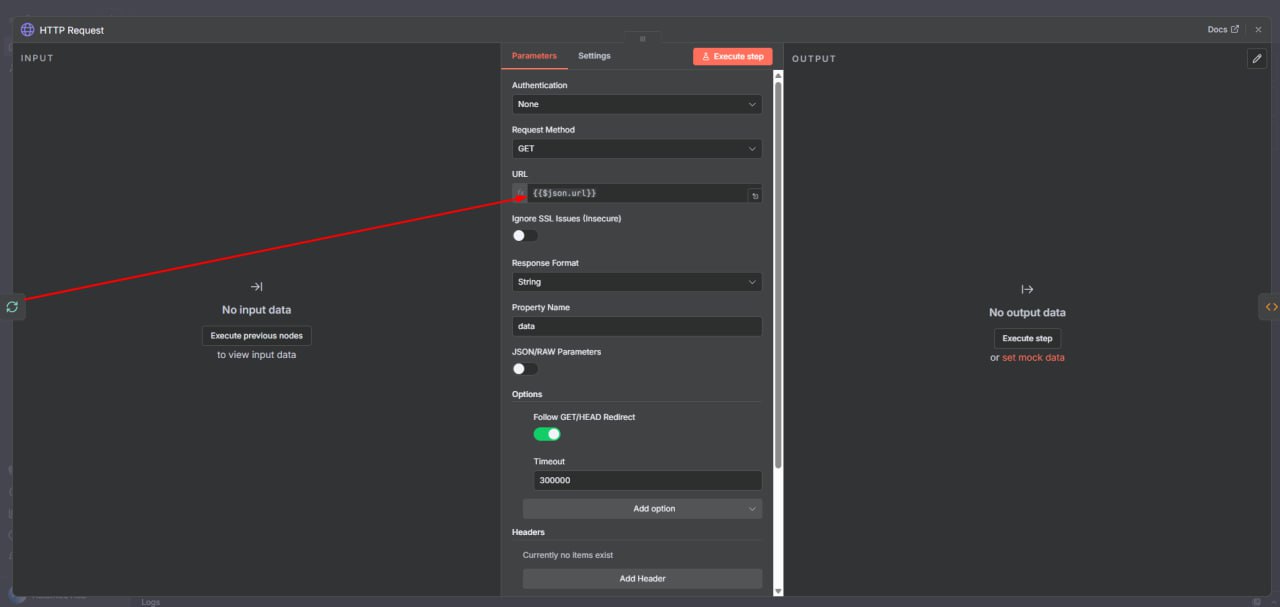
5. HTTP Request
Fifth step is the HTTP Request node.
This node calls every URL and brings back the website’s HTML/DOM content.
Basically, it opens each website and collects the data.
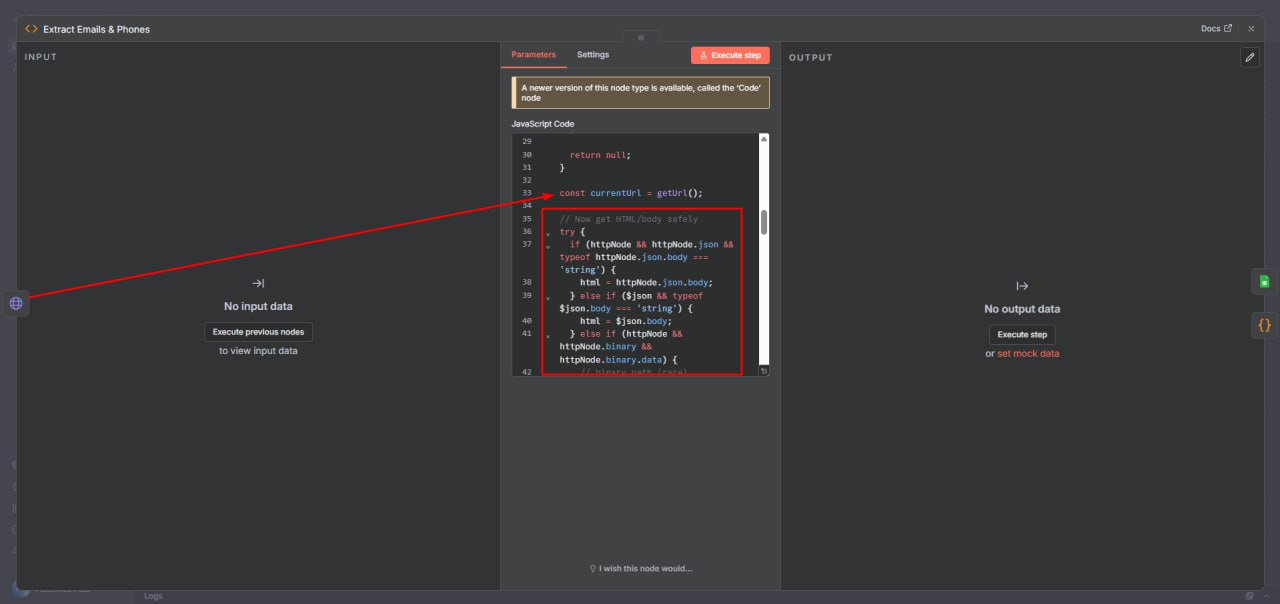
6. Extract Emails & Phones (Function)
Now I run a function where I scan the website’s DOM.
From that DOM, I extract email IDs and phone numbers.
This is the main extraction logic.
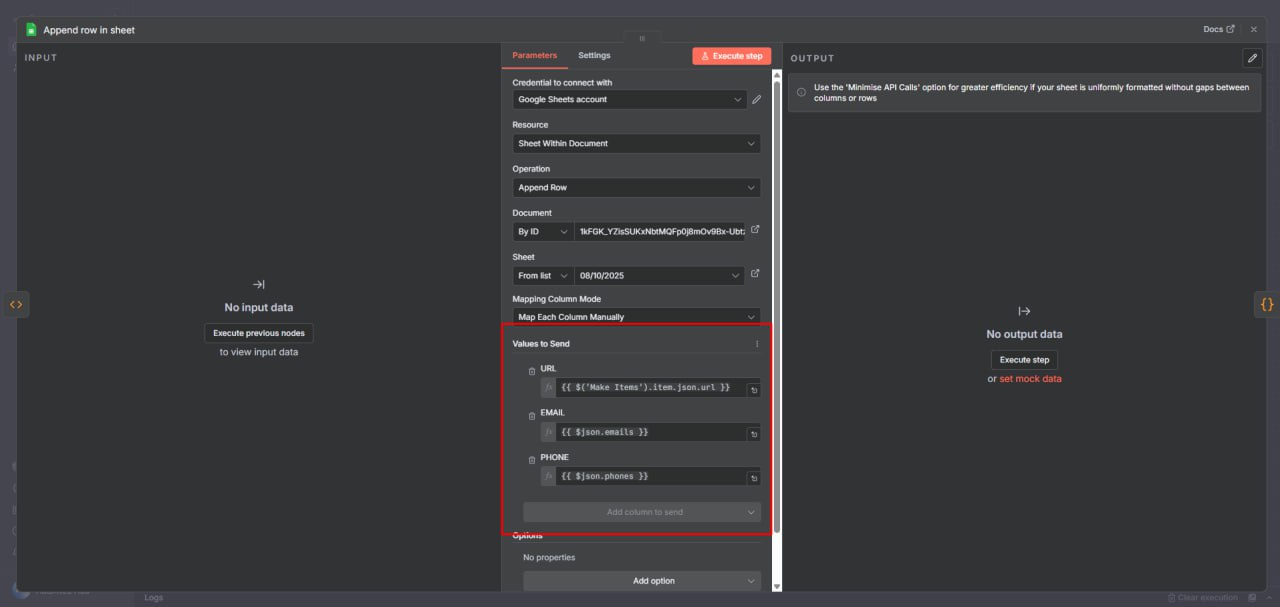
7. Append Row (Google Sheets)
Next, I used Append Row to add the data into Google Sheets.
The extracted website URL, email, and phone number are automatically saved into the sheet.
8. Return Results (Function)
In the last step, I used Return Results.
This sends the final response back to the webhook with the extracted URL, email, and phone number.
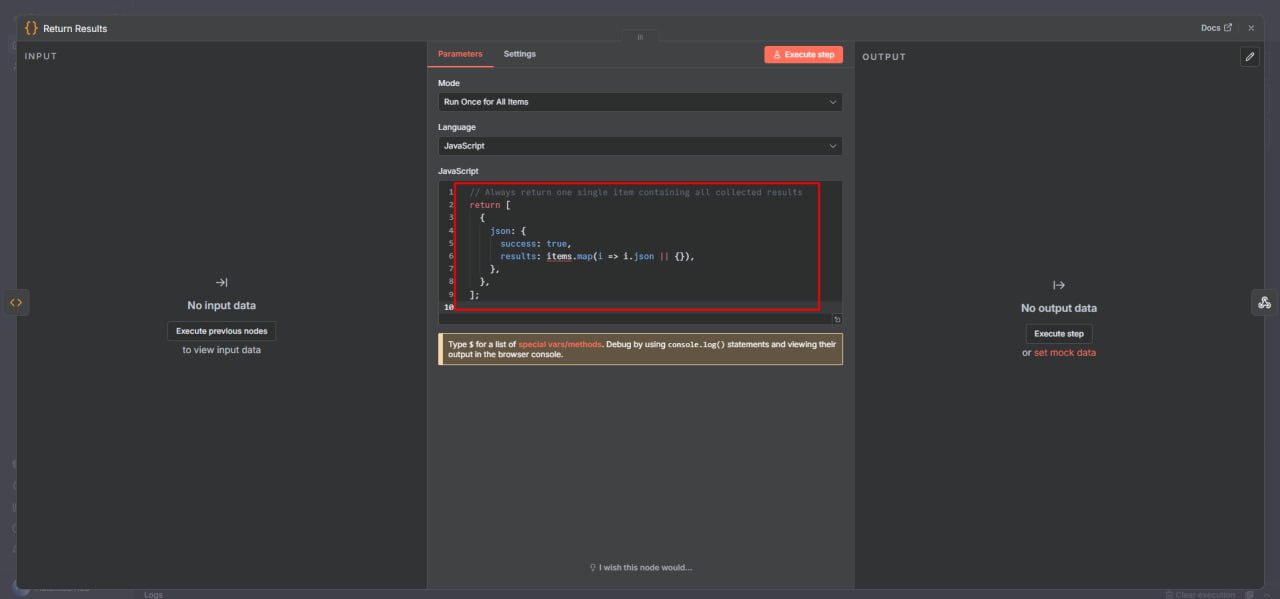
This example shows how a simple problem—extracting data from websites—can be solved through a clean and clear workflow.
Small problems like this become great solutions when you break them into steps and use the right method.
Common Mistakes People Make
When people start working with AI, they make some common mistakes. These mistakes look small, but they create big problems later. Here are the main ones:
1. Building for Hype
Many people make AI systems just because AI is trending. They build something only to show others, not to solve a real problem. This is why their project fails — it has no purpose and no value.
2. Tools Without Workflows
Some people choose tools first and think the tools will fix everything. But without a clear workflow, the tool cannot do anything.
The system becomes confusing, and the result is not good. Tools should come after the workflow, not before.
3. Over-Engineering the System
Another mistake is making the system too big or too complex. People add too many steps, too many features, and too much logic.
This makes the system hard to build and even harder to maintain. Simple systems work better and faster.
4. Not Validating the Real Problem
The biggest mistake is not checking if the problem is real. People assume the problem exists, but they never test it. If the problem is not real, the whole AI system becomes useless. Always validate the problem first before building anything.
Common Agent Types Across All Industries
In almost every industry, the problems may look different, but the type of AI systems that solve these problems are almost the same. These agents work best only when they are connected to a real business problem, not when they are created just for trend.
Here are the most common and powerful agent types:
Lead Follow-Up Agent
A lead follow-up system helps businesses manage all incoming leads without any delay. When new leads come from ads, forms, or WhatsApp, this system checks them, sends follow-up messages, and reminds the owner if someone has not replied. It becomes powerful only when it is connected to a real problem like “we get leads, but we forget to follow up” or “our follow-up is slow and we lose customers.” When this problem is real, the system creates big value because it stops the business from losing money and missed opportunities.
Customer Service Chat Agent
A customer service chat system replies to customer questions instantly on the website or WhatsApp. It helps visitors get quick answers, solves simple issues, and reduces waiting time. This system becomes truly useful when the real problem is slow customer support or delayed responses. Many businesses lose trust because they reply after hours. When a chat system solves this exact problem, it improves customer experience, increases trust, and reduces workload for the team.
Phone-Call Agent
A phone-call system can make or receive calls for reminders, bookings, confirmations, cancellations, or feedback. For many industries, calling every customer manually is time-consuming and impossible at scale. This system becomes powerful when the real problem is “we don’t have time to call everyone” or “we keep missing follow-up calls.” When the system connects to this problem, it saves hours of manual work and keeps communication smooth.
Sales Assistant Agent
A sales assistant system supports the sales team by sending product details, follow-ups, reminders, and next-step messages. Sales teams often forget tasks because of overload or busy schedules. This system becomes valuable when the actual problem is “sales team forgets follow-ups” or “updates are not tracked properly.” When the system solves this real issue, it improves the sales process, reduces mistakes, and helps close deals faster.
Employee Management / Onboarding Agent
An employee management system helps with onboarding, task reminders, attendance follow-ups, and daily updates. Many teams struggle with process management or forget basic tasks. This system becomes useful when the real problem is “our team is not following the process” or “work is not happening on time.” When the system solves these issues, it keeps internal work smooth, disciplined, and more organized.
Analytics / Insights Agent
An analytics or insight system reads business data, checks important numbers, and sends alerts or summaries. Without this, many business owners understand what is happening only after problems become big. This system becomes powerful when the real problem is “we don’t know what is happening in our business until it’s too late.” When connected to this problem, it helps owners take faster decisions, spot issues early, and avoid loss.
Conclusion
Building useful AI systems is not about making something fancy or following the trend. It is about understanding the real problem first and then creating a simple and clear solution that actually works. When we use a problem-first approach, every system we build has purpose, value, and real impact. This is why agentic AI becomes powerful — not because it is advanced, but because it solves the right problem in the right way.
Across different industries, we saw how the same types of systems can create big results when they are connected to real business issues like slow follow-ups, poor customer replies, missed calls, messy sales processes, or no proper insights. These problems look small but affect the business every day. When we solve them step by step with a clean workflow, the business becomes faster, smarter, and more efficient.
The goal is simple: don’t build for hype, build for the problem. Start with a clear understanding, break the work into steps, choose the right tools, and create a system that finishes the job without confusion. When you follow this method, every automation you build becomes useful, and every AI system becomes meaningful.



No Comments